


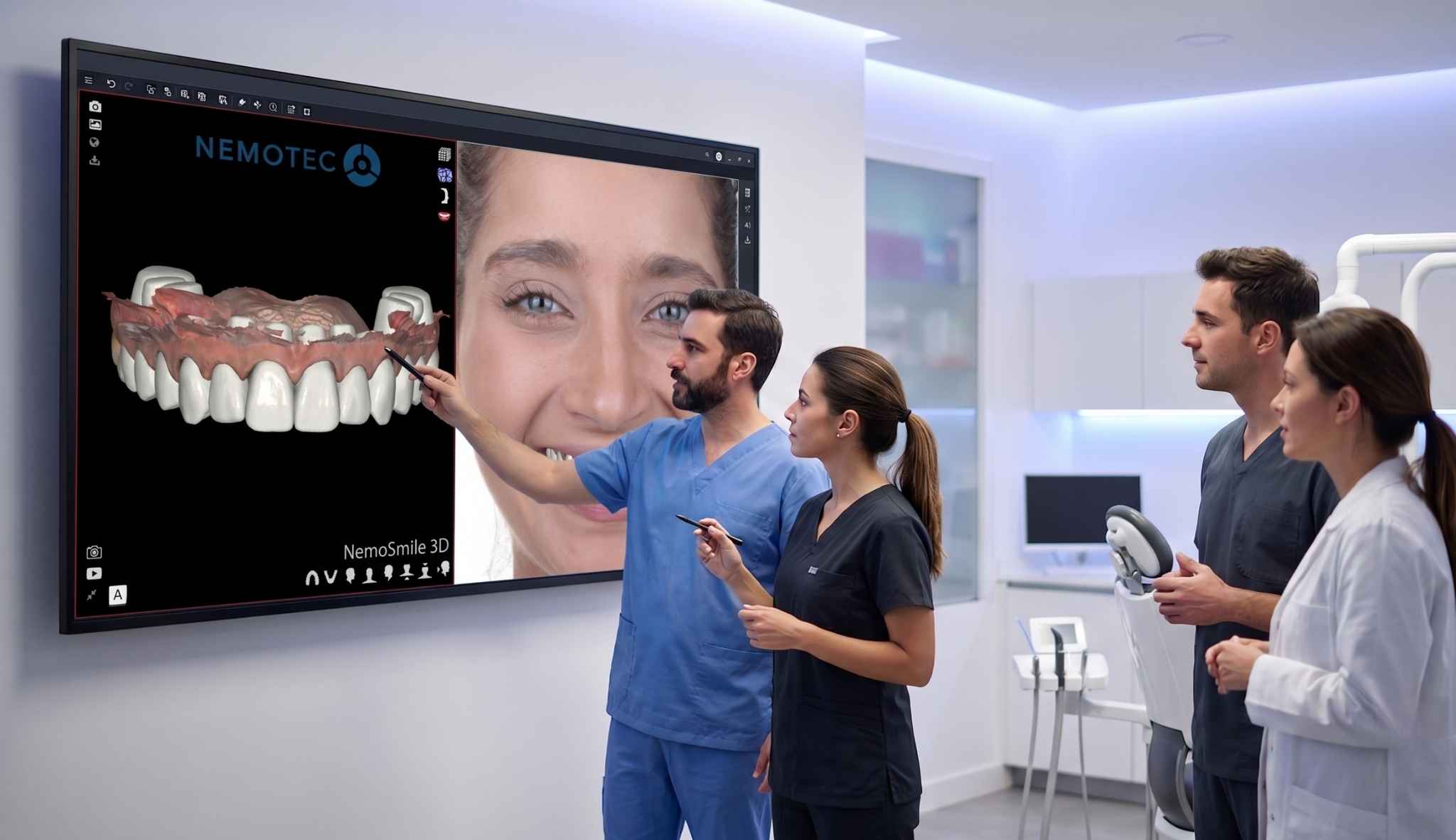
What is a dental digital workflow?
A dental digital workflow is the consequence of work that goes from capturing records to planning, clinical fabrication/guidance, and follow-up, using tools that allow data integration and structured, traceable case documentation.
In our case, this approach is embodied in NemoStudio, which serves as the core fo planning and interdisciplinary collaboration.
How a dental digital workflow works step by step
Capturing records: intraoral scanner, CBCT, and photography.
A robust workflow begins with quality records and a stable protocol. We typically combine:
- Intraoral scanning (digital models).
- CBCT photography (frontal, profile, smile, occlusal).
- Facial scanning in facially guided protocols.
At Nemotec, we place importance on ensuring these records can be incorporated without friction using standard formats (STL/PLY, DICOM, JPG, OBJ).
Data integration and virtual patient creation
The “virtual patient” is a comprehensive digital clinical model that unifies the patient´s different diagnostic records – not merely a 3D visual representation. At Nemotec, this concept is realized through the integration of 2D and 3D records in a unified environment, while speeding up clinical decision – making.
Digital planning with IA and 3D software
Once the clinical case is integrated, digital planning mist address fundamental questions such as treatment objectives, biological limits, the therapeutic sequence, and the effective communication of the plan to both the patient and the clinical team.
At Nemotec, this process is supported by artificial intelligence algorithms designed to automate repetitive, time- consuming tasks – such as anatomical segmentation – allowing the professional to focus on clinical analysis, data interpretation, and decision-making.
In the specific field of cephalometric analysis and orthodontic diagnosis, we offer NemoCeph, a solution that integrates automatic tracings, advanced cephalometric analyses, VTO (Visual Treatment Objective) and 2D diagnostic tools, enabling precise evaluation and more predictable planning.
Fabrication, clinical guidance, and follow-up
Depending on the type of treatment, the digital workflow culminates in the generation of devices, clinical guides, and associated documentation, subsequently incorporating tracking and comparison tools to evaluate case progress:
- In orthodontics: aligner planning, guides, and setups.
- In implantology: surgical guides and prosthetically guided planning.
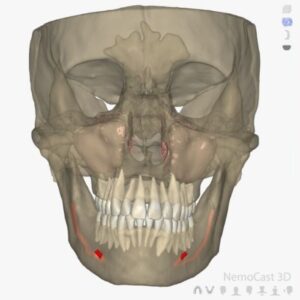
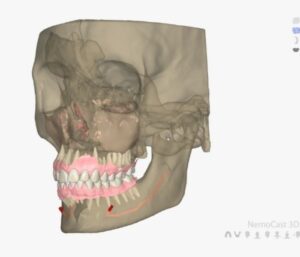
- In orthognathic surgery: splints and advanced analyses.
- In aesthetics: mockups and preparation guides.
At Nemotec, each of these applications is managed through specialized modules, designed to meet the specific requirements of each clinical area and treatment type:
- Digital orthodontics: NemoCeph, NemoCast, NemoFAB Ortho forms an integrated workflow covering cehalometric and 2D diagnostic analysis, 3D planning, aligner design, and clinical generation.
- Implantology: NemoScan for prosthetically guided planning, digital splints, airway analysis, and the Arnett protocol.
- Aesthetic dentistry: NemoSmile for digital smile design, mockups, and preparation guides.
Key technologies in the dental digital workflow
CAD/CAM, 3D printing, and STL, PLY, DICOM, and OBJ formats
Beyond “CAD/CAM,” what is critical is that the workflow has a real interoperability:
- STL/PLY for intraoral scanner models.
- DICOM for CBCT.
- JPG for clinical photography.
- OBJ for facial scanning.
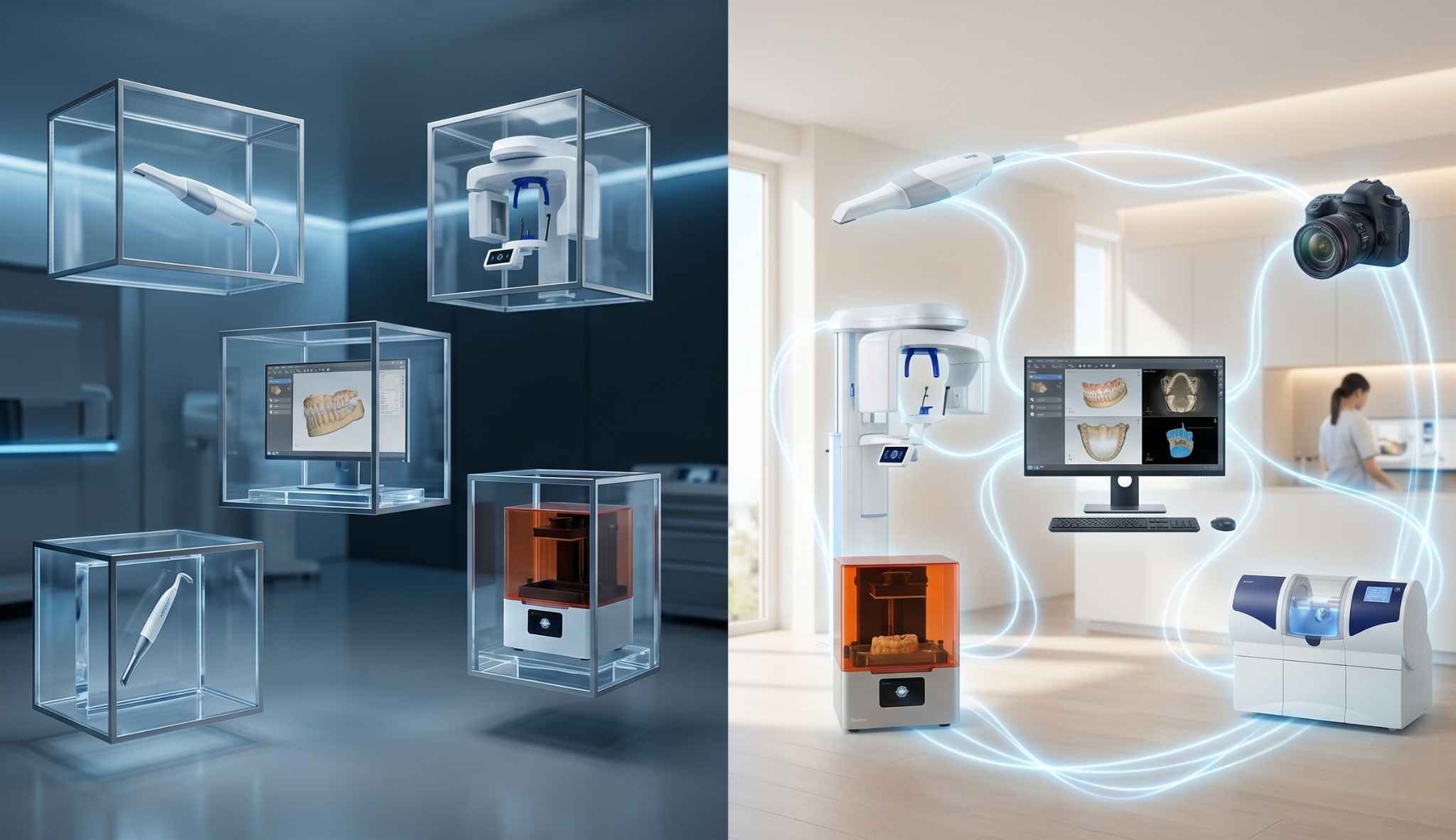
Open platforms vs closed systems
Digitalizing a practice should not limit its ability to grow and adapt to new needs.
Whiles closed systems may require working within a single ecosystem, open platforms offer greater flexibility to incorporate new technologies and workflows.
At Nemotec, we are committed to an open approach that allows practices to integrate different equipment and digital solutions, adapt to evolving technology, and maintain continuity of their process without overhauling their entire working system.
Benefits of the digital workflow for the practice, the professional, and the patient.
More accurate diagnoses and more predictable treatments.
Thanks to the integration of all clinical records in a single environment.
Greater clinical efficiency
Reducing adjustments, rework, and chair time through more detailed planning.
Better communication with the patient
Facilitating understanding and acceptance of the treatment.
Smoother collaboration between practice, laboratory, and specialists
With shared access to information and online validation tools.
Clinical applications of the dental digital workflow
Orthodontics and aligners
In orthodontics, the integration of intraoral scans, photographs, and CBCT (when indicated) enables treatment planning with greater precision and predictability. This results in better control of tooth movements, more complete documentation, and more efficient communication between the practice, laboratory, and patient.
Guided implantology and immediate loading
In implantology, the digital workflow facilities prosthetically guided planning, improving treatment precision, and predictability. The combination of CBCT, digital models, and photographs optimizes coordination between surgery and prosthetic rehabilitation.
Aesthetic dentistry and smile design
In aesthetic dentistry, digital tools allow treatment proposals to be designed, visualized, and validated before execution, supporting better patient communication and more predictable planning.
Orthognathic surgery
In orthognathic surgery, digital integration of diagnosis, planning, and splint fabrication allows for greater control of skeletal and functional relationships, improving treatment precision and coordination among the professionals involved.
Challenges when implementing a dental digital workflow
Initial investment, training, and learning curve
The main challenge is not buying technology; it is implementing a process: record capture protocols, planning criteria, team responsibilities, and quality control. Without that foundation, the initial investment translates into friction: rework, duplicate files, inconsistent criteria between clinicians, or excessive dependence on the laboratory.
At Nemotec, we typically find that implementation works best when approached in phases:
- Phase 1 (minimum viable): standardize caputre (scanning, photography, and CBCT when applicable), file management, and report templates.
- Phase 2 (stable workflow): Integrate records and establish a planning protocol with internal reviews.
- Phase 3 (scaling): incorporate new indications or specialties while maintaining the same working “language”.
And one important point: to reduce the learning curve, the most effective support is usually structured training and, in complex case or peak demand periods, external planning as operational reinforcement.
Interoperability, support, and software scalability
The risk here is not theoretical. It is operational. A digital workflow breaks down when the practice becomes trapped in tools that do not share data fluidly or that require constant workarounds (exports, conversions, loss of traceability, etc.) It is therefore advisable to prioritize:
- Real interoperability (standard formats and records).
- Support and continuity (the ability to keep the workflow stable over time).
- Scalability (growing by specialty without rebuilding the core process)
How to choose a digital workflow solution for your practice
Checklist of criteria before deciding
- Does it integrate standard formats (STL/PLY, DICOM, JPG, OBJ) without complex conversions?
- Is it an open platform that reduces vendor lock-in risk?
- Does it include useful AI-powered automations to save time without losing clinical control?
- Does it facilitate collaboration (cloud/web viewer) with the laboratory and specialists?
- Does it cover specialties with clear modules (orthodontics, implants, orthognathic surgery, aesthetics)?
- Is there a real training and ongoing support plan?
When to rely on training or external planning
Adopting new digital workflows can benefit from training support and external planning to accelerate the learning curve and ensure consistent results.
This support is especially useful when:
- The team is implementing new digital tools or protocols.
- Cases of greater clinical complexity are being handled.
- The goal is to standardize processes and optimize the workflow.
- The practice wants to increase its planning capacity.
At Nemotec, this is addressed by combining NemoUniversity with the Planning Center to outsource technical planning while keeping the final clinical decision in the hands of the clinician.
Frequently asked questions about dental digital workflows
How does the dental digital workflow affect treatment acceptance?
It increases acceptance when it improves three critical areas:
- Understanding: the patient understands the why and how of the plan (sequence, objectives, alternatives).
- Trust: they see consistency between records (photos + models + CBCT when applicable) and a plan that “fits” their case.
- Decision: They receive a clear proposal, with visual deliverables and a consistent message across the entire team.
What records should be integrated to create a reliable virtual patient?
It depends on the case, but as a reasonable clinical baseline:
- Dental model (intraoral scan or digital model): for occlusion, arches, and dental planning.
- Clinical photography: for soft tissues, aesthetics, and communication.
- CBCT (DICOM): when indicated (implants, surgery, asymmetries, 3D evaluation, etc.)
- Facial scan (OBJ): when the protocol is facially guided or aesthetics play a significant role in the decision.
What are the risks of using software that is not mutually compatible?
The main risk of using incompatible software is case fragmentation: diagnosis and planning become scattered, traceability is lost, and rework increases (imports, conversions, version mismatches). Additionally, vendor dependency grows, making it harder to scale or change components of the workflow without rebuilding the operational core.