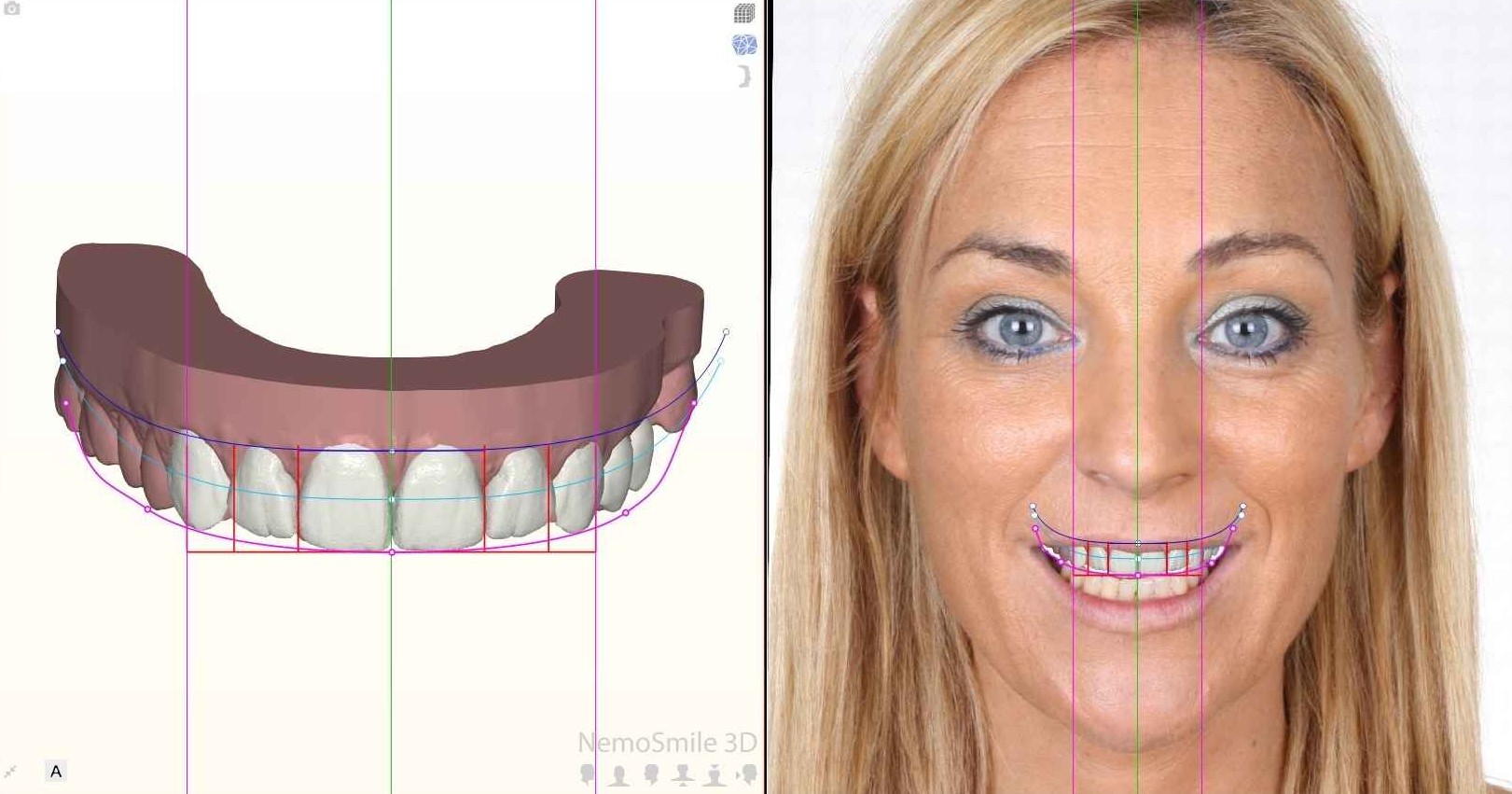
What is a dental mock-up in cosmetic dentistry?
A dental mock-up is an intraoral clinical trial (direct or indirect) that brings the proposed design—derived from a diagnostic wax-up or a digital design—to life using a temporary restoration that reproduces the shape, volume and proportions. Its aim is to validate the treatment plan and facilitate its transfer to the final restoration.
In our workflows, the mock-up is integrated with the 3D design and aesthetic planning within the NemoStudio ecosystem NemoStudio, particularly when we are seeking consistency between the face, smile and restoration.
How it is used in clinical planning
Aesthetic, functional and phonetic validation
A clinically useful mock-up allows for:
- Aesthetic assessment: proportions, dominant elements, tooth display, lip support, buccal corridors, incisal edge and dynamic smile.
- Functional assessment (as appropriate): anterior guidance, contacts, interferences and occlusal tolerance.
- Phonetic assessment: speech tests to confirm correct tooth position and phonetic function.
- Validation of vertical dimension (where applicable): assessment of the patient’s functional and aesthetic adaptation to changes in the vertical dimension of occlusion.
Our clinical recommendation is to treat the mock-up as a “test” using a checklist: if critical aspects (e.g. incisors and phonetics) are not validated, there is a risk of carrying the error over to the final restoration.
Clinician-patient communication and patient acceptance
The mock-up serves as a tool for reducing uncertainty: it shortens the decision-making process, aligns expectations and often increases acceptance of the treatment plan because the patient can assess the proposal in a tangible way in their own mouth (dynamic aesthetics and, where applicable, phonetics).
In parallel, it provides a clear operational benefit: it improves clinical-laboratory coordination and reduces unproductive iterations by setting validation criteria before the final restoration.
At Nemotec, we reinforce this by working within a workflow based on a shared source of truth, avoiding silos between disciplines and consolidating records in an interoperable environment within NemoStudio.
Types of dental mock-ups
Motivational mock-up
A mock-up created primarily to give the patient a quick visual idea of the potential aesthetic outcome and to facilitate clinical communication.
Objectives:
- To improve understanding of the treatment plan.
- To facilitate acceptance of the treatment.
- To visualise overall changes in shape, volume and smile.
Features:
- Based on a wax-up positioned slightly more vestibularly to allow coverage of the vestibular tooth surface.
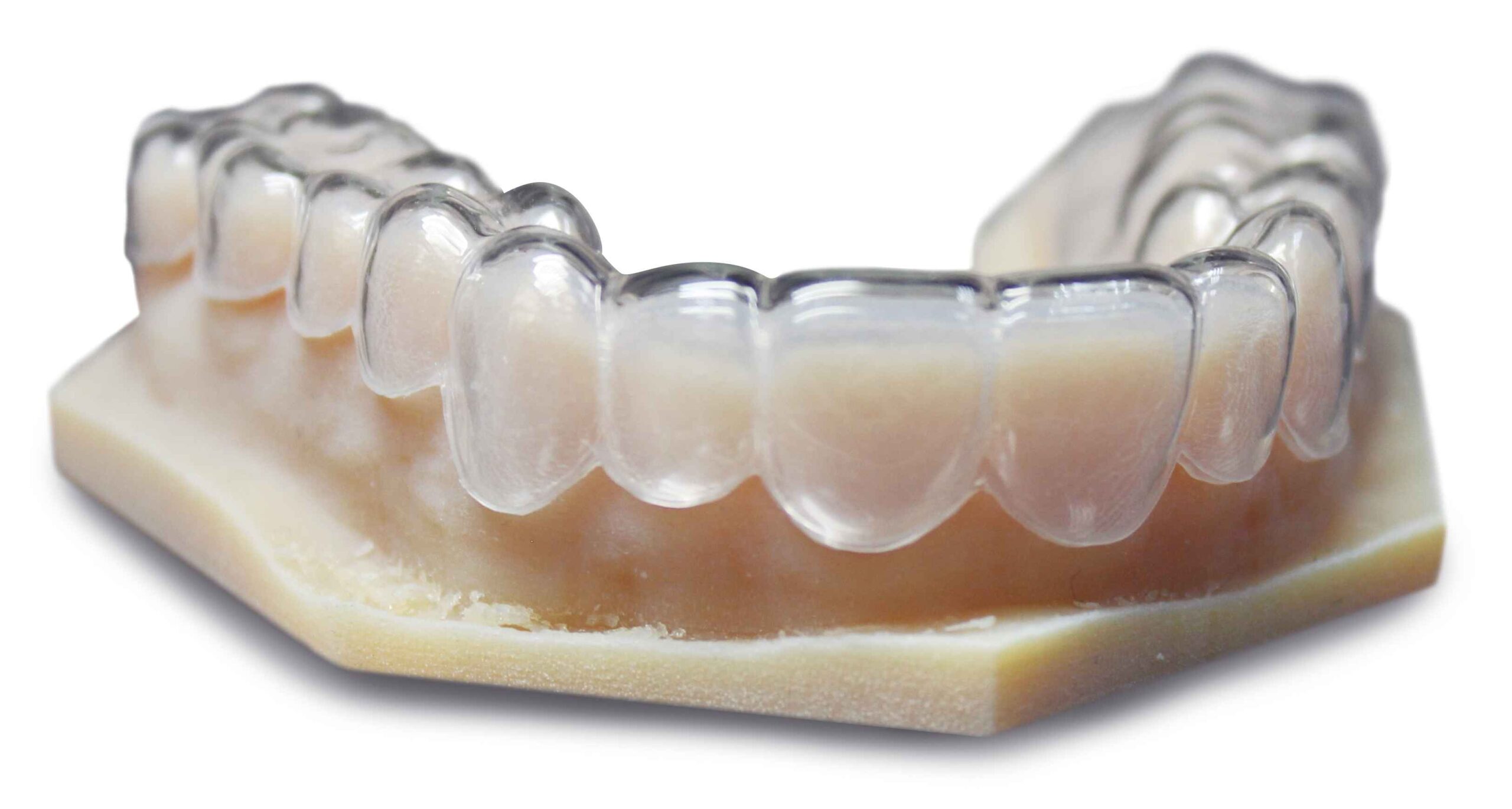
- Can be carried out directly in the clinic using a key and temporary resin.
- Does not necessarily validate all functional or occlusal parameters.
Main limitation:
- Should not be interpreted as an exact reproduction of the final result.
Ideal or functional mock-up
A mock-up designed to clinically and reproducibly validate aesthetic, functional and phonetic parameters prior to the final phase. It is used as a temporary solution for the patient.
Objectives:
- To confirm aesthetics and dental proportions.
- To assess occlusal function and anterior guidance.
- To validate phonetics, lip support and vertical dimension where applicable.
- To reduce the risk of errors in the final restoration.
Features:
- Based on a functional occlusal registration.
- Requires accurate clinical records and precise transfer.
- May require gradual adjustments and a period of adaptation.
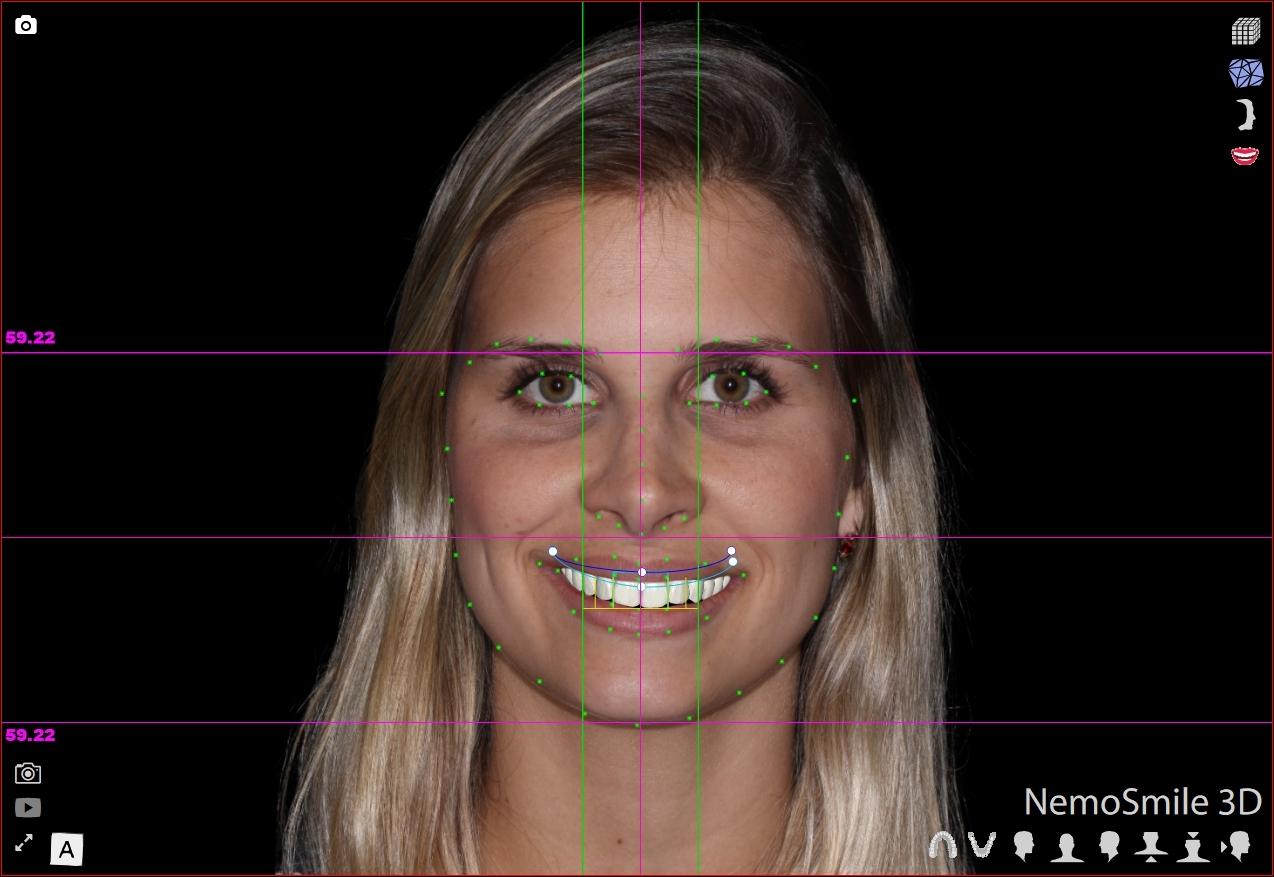
Workflow for creating a dental mock-up
Photographic records, intraoral scan and facial analysis
A reliable mock-up starts with reliable records:
- Standardised extraoral and intraoral photographs (resting, smiling, etc.)
- Intraoral scan (STL/PLY)
- Facial landmarks (facial thirds, interpupillary line, perceived occlusal plane, asymmetries)
At Nemotec, we are working to ensure that these files can coexist in an interoperable environment (STL/PLY, JPG, DICOM) within NemoStudio, with the aim of reducing errors caused by fragmentation and facilitating interdisciplinary collaboration.
Digital smile design and diagnostic wax-up
Two common approaches (which can be combined):
- 2D DSD as initial alignment (aesthetics and proportions)
- 3D design / digital wax-up to control volume, emergence and transfer
Within our ecosystem, this work is integrated with NemoSmile for facial-guided design, mock-ups and associated guides.
Clinical testing, adjustments and validation of the plan
The critical phase (the one that prevents rework):
- Aesthetic adjustments (contours, lengths, dominance)
- Functional adjustments (if applicable)
- Phonetic validation (if there are significant incisal changes)
- Final approval of the design + documentation for transfer
When a case requires complex planning or the team wishes to scale up capacity without disrupting the clinical schedule, we can rely on our planning centre for technical planning with online validation.
Clinical applications of dental mock-ups
Veneers, crowns and aesthetic restorations
- Veneers: validation of lengths, lip support, micro/macro-aesthetics and communication of objectives.
- Cosmetic crowns: checking emergence, proportions and symmetry.
- Rehabilitations: comprehensive assessment of aesthetic changes, and functional changes where applicable.
Gingivectomy, implantology and multidisciplinary cases
- Gingivectomy/gingival harmonisation: the mock-up helps to set aesthetic goals and coordinate the treatment plan.
- Implantology and multidisciplinary cases: when orthodontics, prosthetics, soft tissue and/or surgery need to be coordinated, the mock-up reduces ambiguity and serves as a “visual contract” for the outcome.
Our experience with interdisciplinary workflows is clear: when records are integrated and accessible, errors caused by a lack of context are reduced and decision-making is accelerated.
Digital dental mock-ups and integration with 3D software
Facial-guided design and motivational mock-ups
The unique value of digital technology becomes apparent when the design is facial-guided.
At Nemotec, we tackle this using facial-guided design and specific tools within NemoSmile, aimed at enhancing the aesthetic consistency and communicability of the treatment plan.
Benefits in terms of precision, efficiency and predictability
In clinical terms, 3D integration offers:
- Precision: fewer discrepancies between the photograph, scan and treatment.
- Efficiency: reduction in unproductive iterations; traceable changes.
- Predictability: better transfer of the approved design to the final restoration.
This is consistent with NemoStudio’s approach as an open and interoperable platform, designed for clinical collaboration and continuity of the digital workflow.
Limitations and clinical criteria for use
When an aesthetic simulation is not enough
There are cases where an aesthetics-focused mock-up is insufficient if not accompanied by a comprehensive diagnosis:
- Significant occlusal dysfunction / parafunction
- Periodontal conditions and delicate biotypes
- Cases where the final volume depends on soft tissue surgery, prior orthodontic treatment or prosthetic considerations
In these scenarios, the mock-up should form part of a comprehensive plan, not replace it.
Common errors in planning and transfer
The most common mistakes we see in the clinic and laboratory:
- Poor or inconsistent records (non-standardised photos, incomplete scans, weak facial landmarks)
- Non-transferable design (inaccurate key/index, lack of guides, poorly documented temporaries)
- Incomplete validation (failure to assess phonetics where appropriate)
- Confusing a digital mock-up with a clinical trial (they are not equivalent in terms of dynamics and phonetics)
Frequently asked questions about dental mock-ups
What is the difference between a mock-up and a digital smile design?
A digital smile design is the planning process (2D/3D). A mock-up is the clinical model that allows the design to be validated before the final treatment is carried out.
When should a physical mock-up be used, and when a digital one?
- Digital: initial alignment, preliminary communication and rapid decision-making.
- Physical: when we need to validate dynamic aesthetics, phonetics and clinical tolerance before irreversible procedures.
What records are essential for planning?
As a minimum standard:
- Standardised photographs + intraoral scans (STL/PLY). And where the case requires it:
- CBCT (DICOM) and 3D integration for anatomical context and multidisciplinary planning.
How does it help to increase treatment acceptance?
It reduces uncertainty and improves communication of clinical value: the patient gains a clear understanding of the treatment plan. In our workflow, we also ensure that this communication is supported by integrated records and a traceable design within NemoStudio, using specific aesthetic tools such as NemoSmile.